

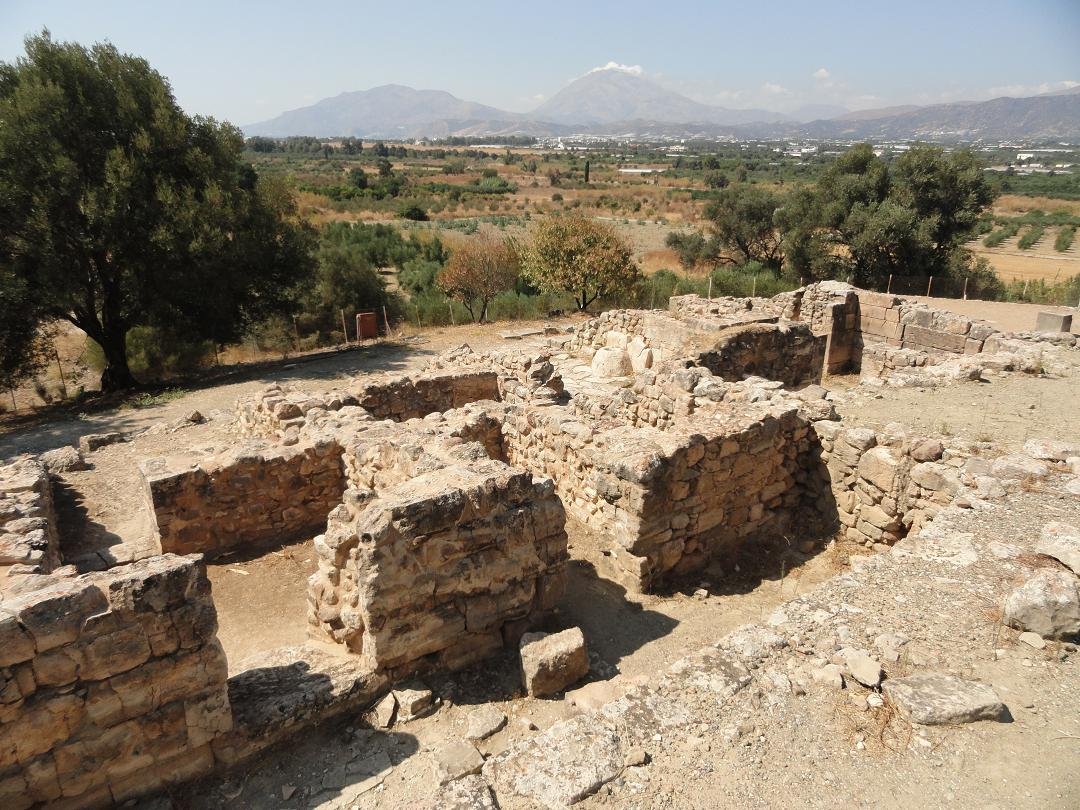
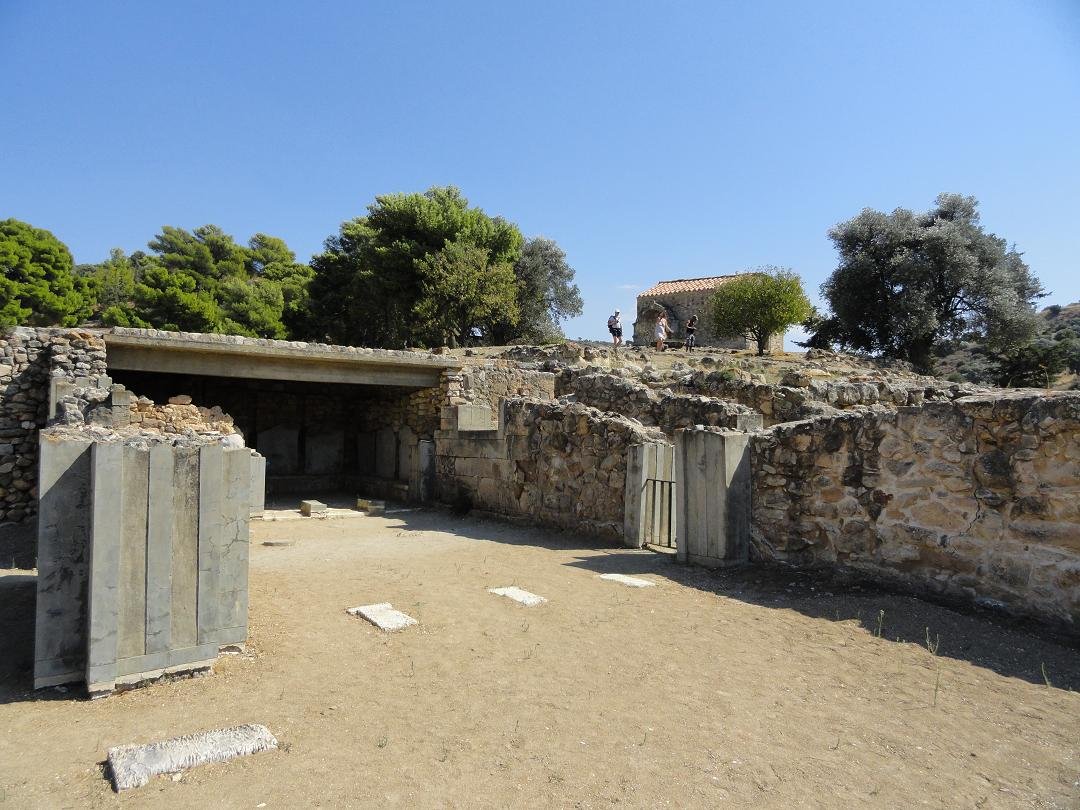

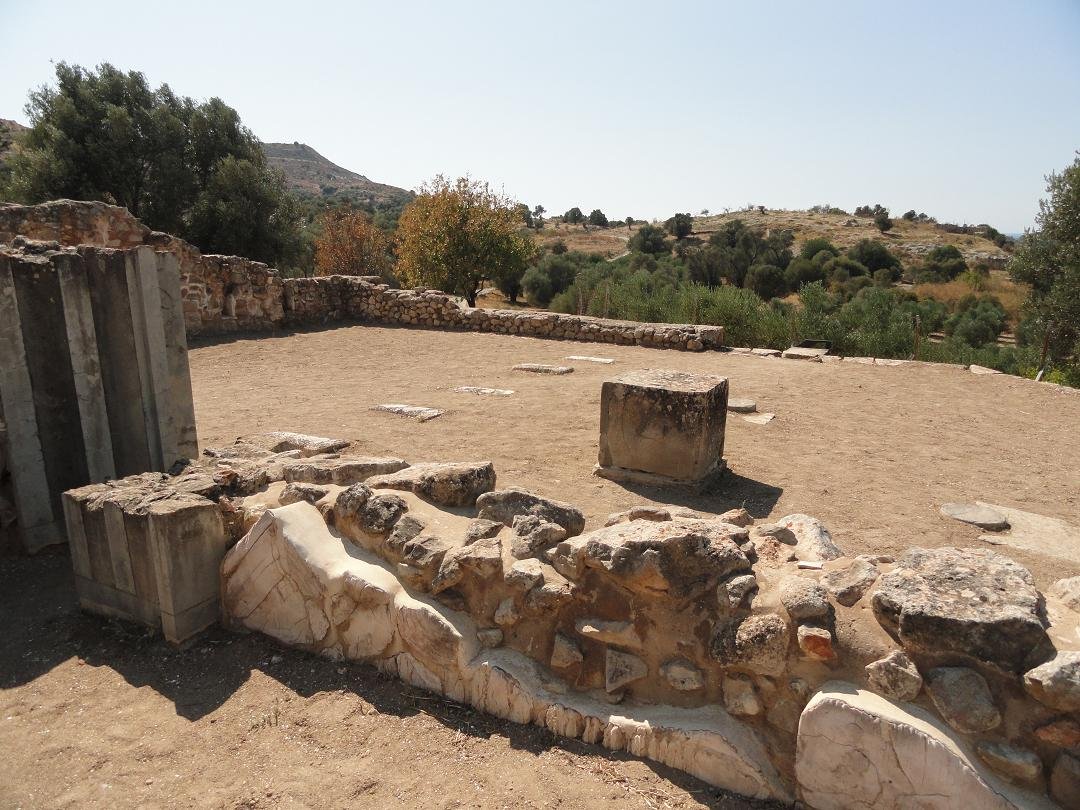


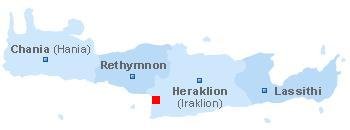
 The Agia Triada is a large Minoan excavation in the south of the island of Crete, close to the town of Timpaki. By the Italian archaeologists who have excavated the site it was named after a nearby abandoned medieval village that was destroyed by the Turks. If you drive eastwards from Timpaki towards Mires, the first exit on the right hand side goes to Kalamaki Beach and just after that you see the brown sign for the exit to the Agia Triada. The last few hundred meters to the Minoan excavations go over a dirt road. That was the case in 1975 when I first came to see the place, and when I came back in 2011 it was still unchanged. Nowadays you end up at a parking, which was not there before, and the ticket house at the excavation is also new. I'm not sure if it always goes like this, but the ticket house is staffed and you get a beautiful ticket stating that the price of entrance is zero euro and you get a leaflet with a map and a story on it. Maybe you should take time to read it, but I my impression was that nobody did, and also the map is so small and unclear in terms of numbers on them, that I could not figure out what was where and what.
Another thing that has changed is that over the years a lot more has been excavated at the Agia Triada palace. When I was there for the first time came in 1975 it was still labeled a Minoan summer villa of the rulers of the Palace of Pheastos which is situated three kilometers further away, but as more of Agia Triada was exposed (in 1976 they continued the digging), the true extent of the complex came up and now there is doubt about its former function. Especially when beautiful frescoes were found, much prettier than those that were already excavated at Phaistos, a theory raised that the palace of Agia Triada, after its construction in 1550 BC, was the real seat of the Minoan king, and that Phaistos had become more a place with a religious function. Summer Villa or small palace, Agia Triada remains an interesting place to visit.
From all Minoan palaces the Agia Triada palace has the most beautiful views. It lies on a hillside overlooking the Messara plain and the mountains beyond. It is pleasant that it is not a major tourist attraction like for example the Palace of Knossos, where the tour buses are lined up to get people inside and where you have to look at the excavations with hundreds of people in a row. It is also more of the route from the really large tourist resorts like Malia and Hersonissos, which are at quite some distance. Here at Agia Triada it is relatively very quiet and you can take the time to view everything and take pictures without constantly people appearing in front of your lens. When we were there in September 2011 there were I think about ten to twenty people.


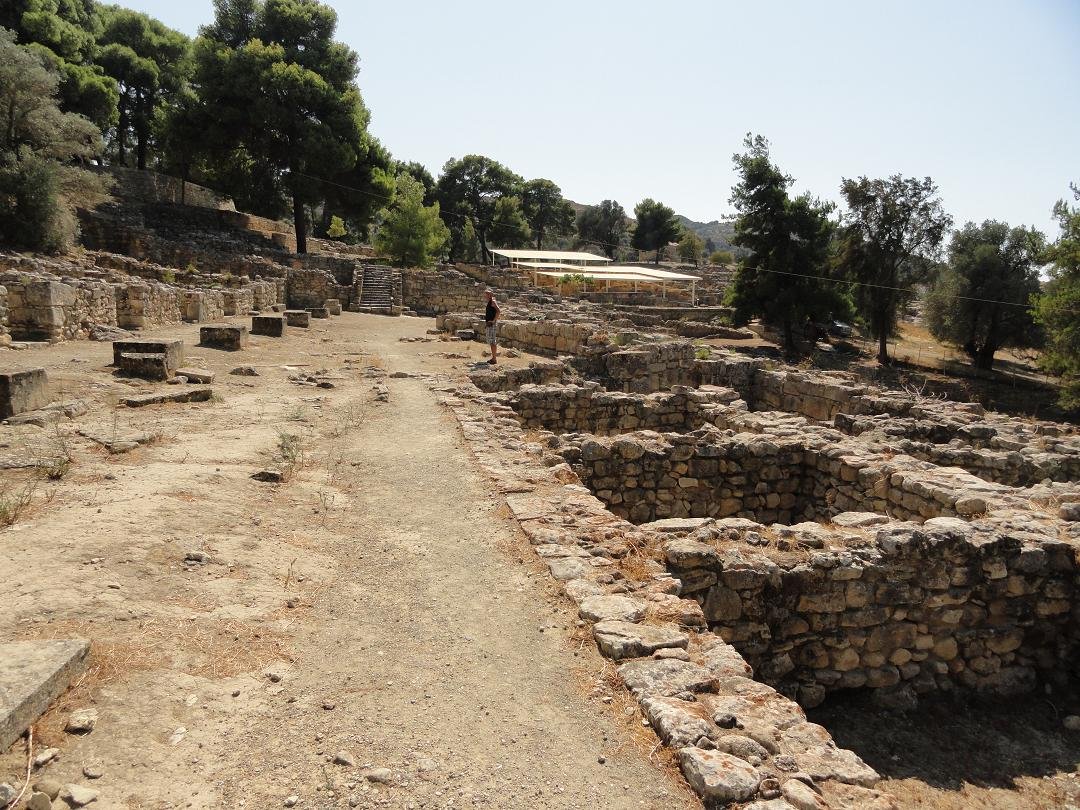
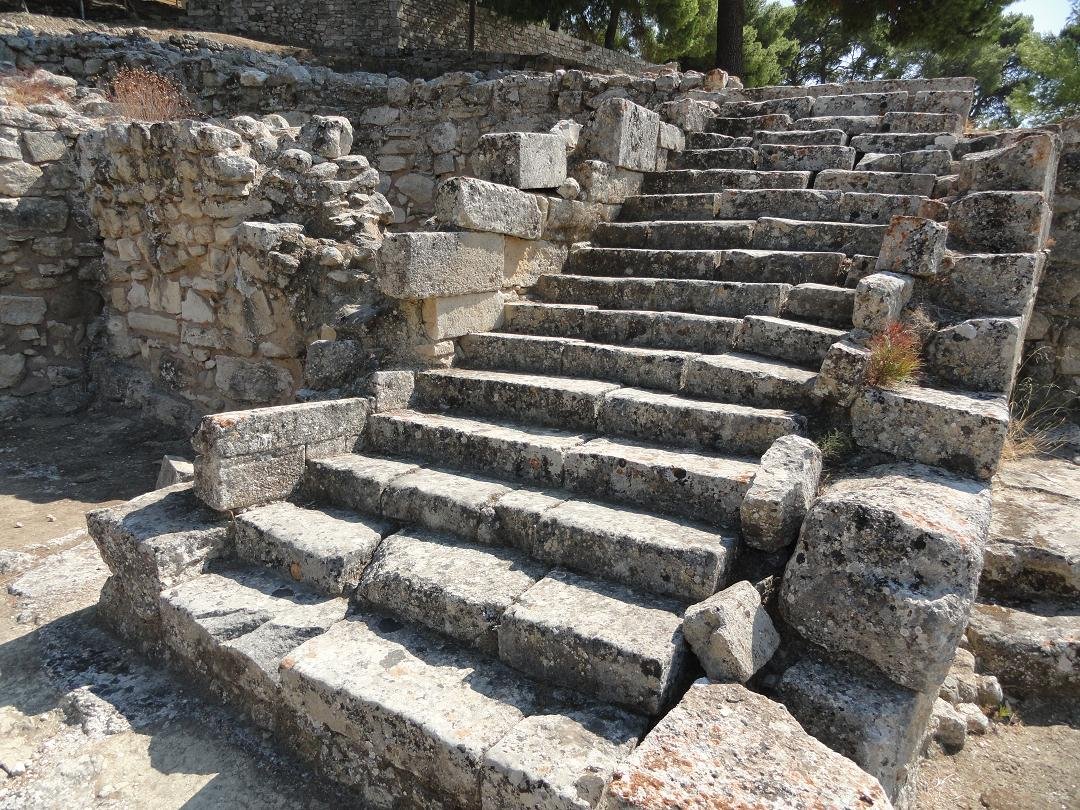
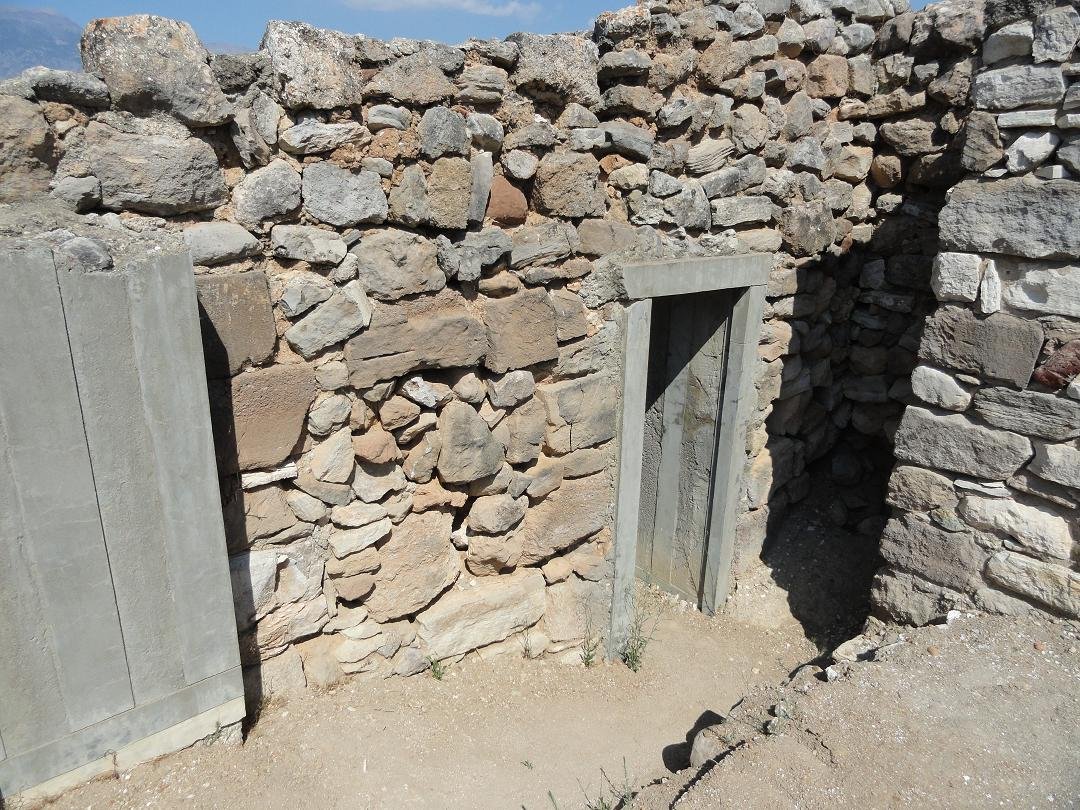
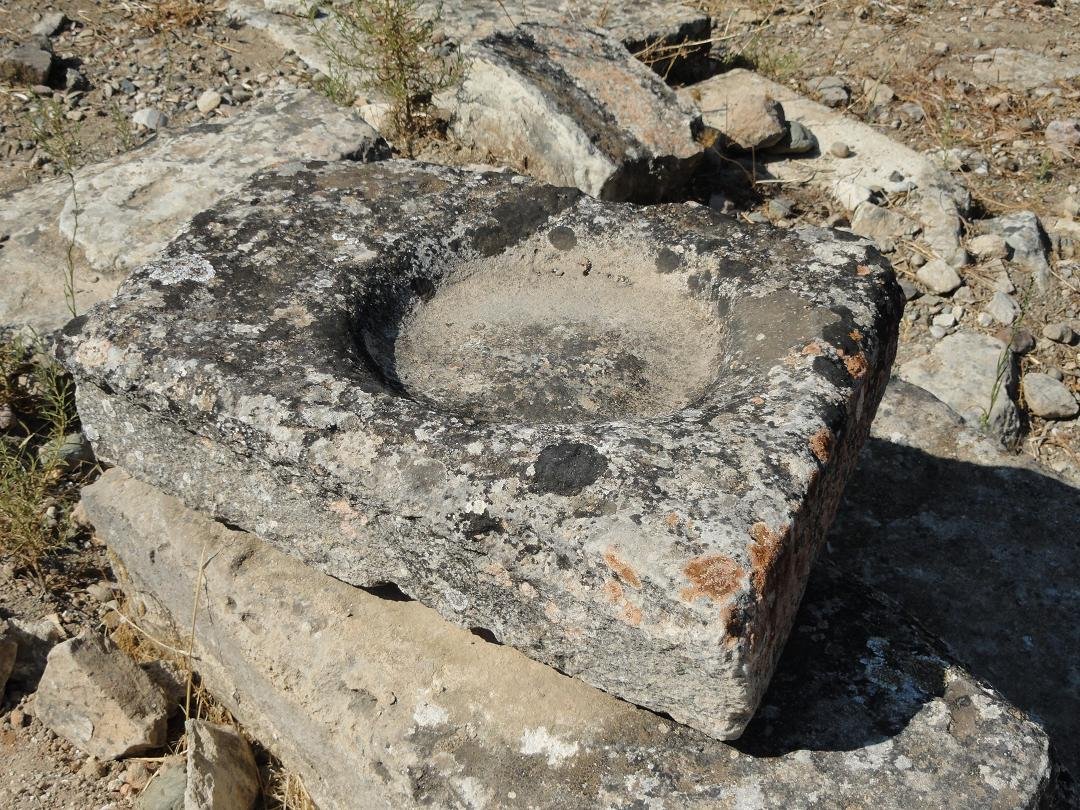

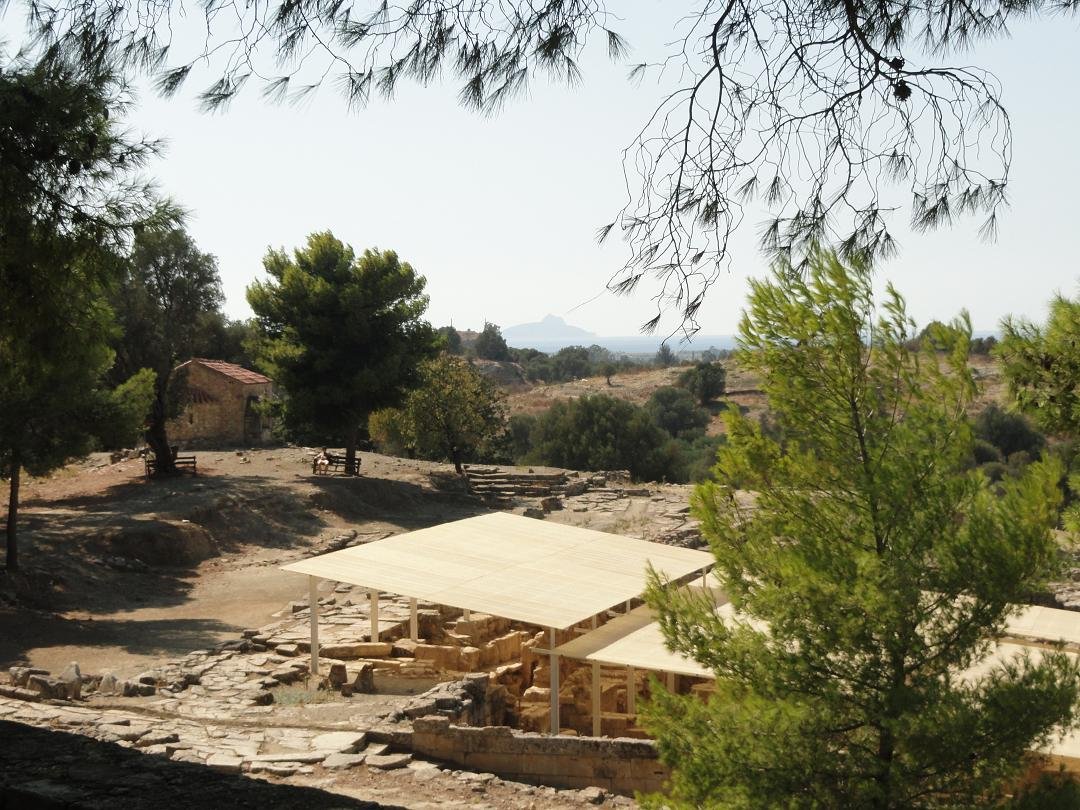
The excavated objects and the remains of the complex indicate that Agia Triada was already inhabited in the period 2600 - 1700 BC. The palace itself is of a later date. It is in some way a special place. Especially when for example you climb the stairs to the agora (marketplace) and you realize how old those stairs are and you fantasize about the people who walked there before you, and how busy it must have been, it is a very weird feeling (well, at least for me, haha). The palace complex was built around 1600 - 1550 BC after an earthquake had destroyed many buildings in Crete, and it was only inhabited for about one hundred years. Around 1450 BC it was destroyed, just like many other Minoan buildings. In the intervening period Agia Triada quickly flourished.
There is a small palace with two wings, surrounded by an old Minoan city. In Agia Triada also the remains of the first covered market in the history of mankind were uncovered. During excavations many clay tablets with Linear A script (a language that has never been deciphered), sculpted vases and frescoes were found. Moreover in the town cemetery a beautiful carved sarcophagus dating from around 1400 BC was found. It was made for a Mycenaean prince that was buried in it. The objects can be viewed in the Archaeological Museum of Heraklion. Interestingly the findings after the earthquake around 1650 BC were much richer in Agia Triada and before the earthquake the findings in Phaestos were richer. Exactly what place had which function is unclear (was Agia Triada a summer villa and Phaistos palace, and did Agia Triada become the palace at a certain moment in time and did Phaistos become something religious?).
During the Mycenaean period a new palace built was built on the ruins of the Minoan palace(14th to 11th century BC) and to the north appeared a settlement with a marketplace (agora). During the Hellenistic period (4th-1st century BC) a small shrine was put down, which was dedicated to the god Zeus.
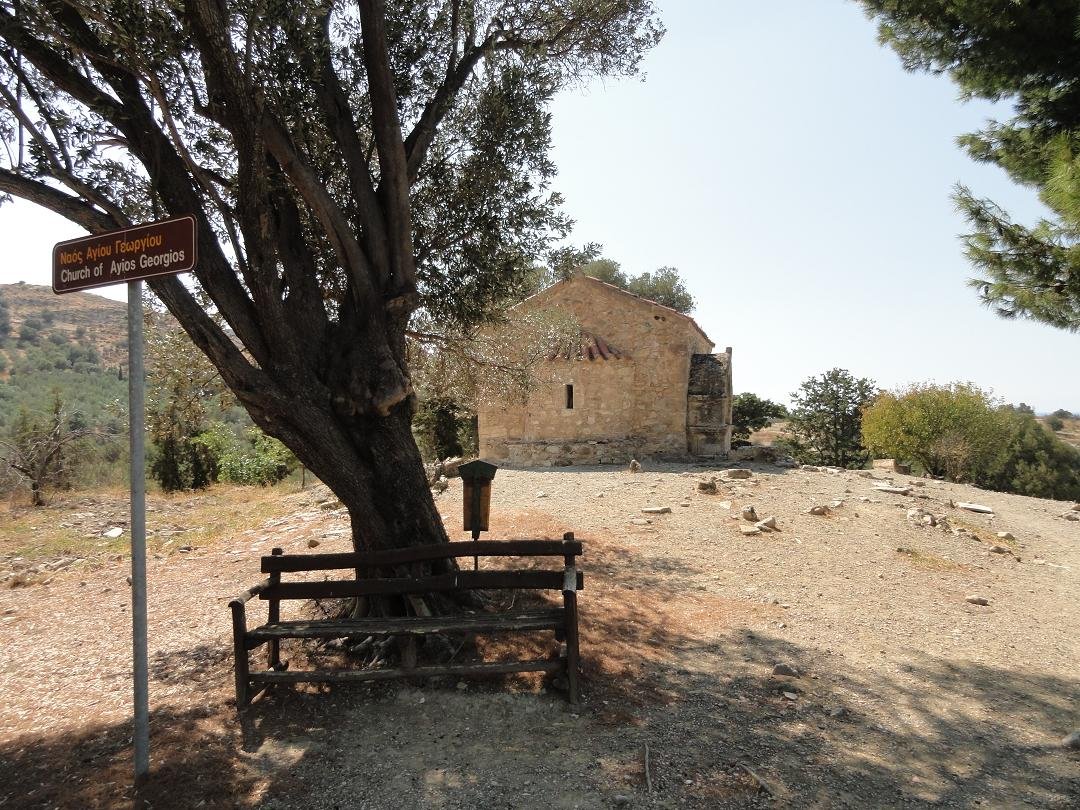
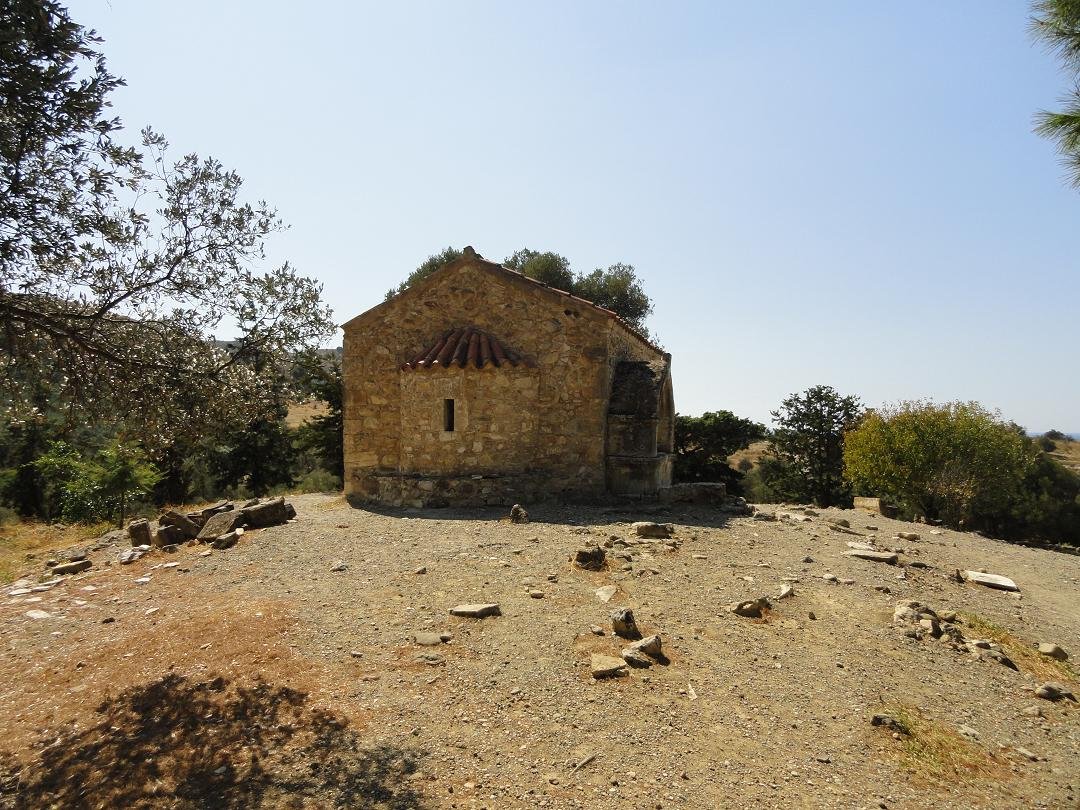


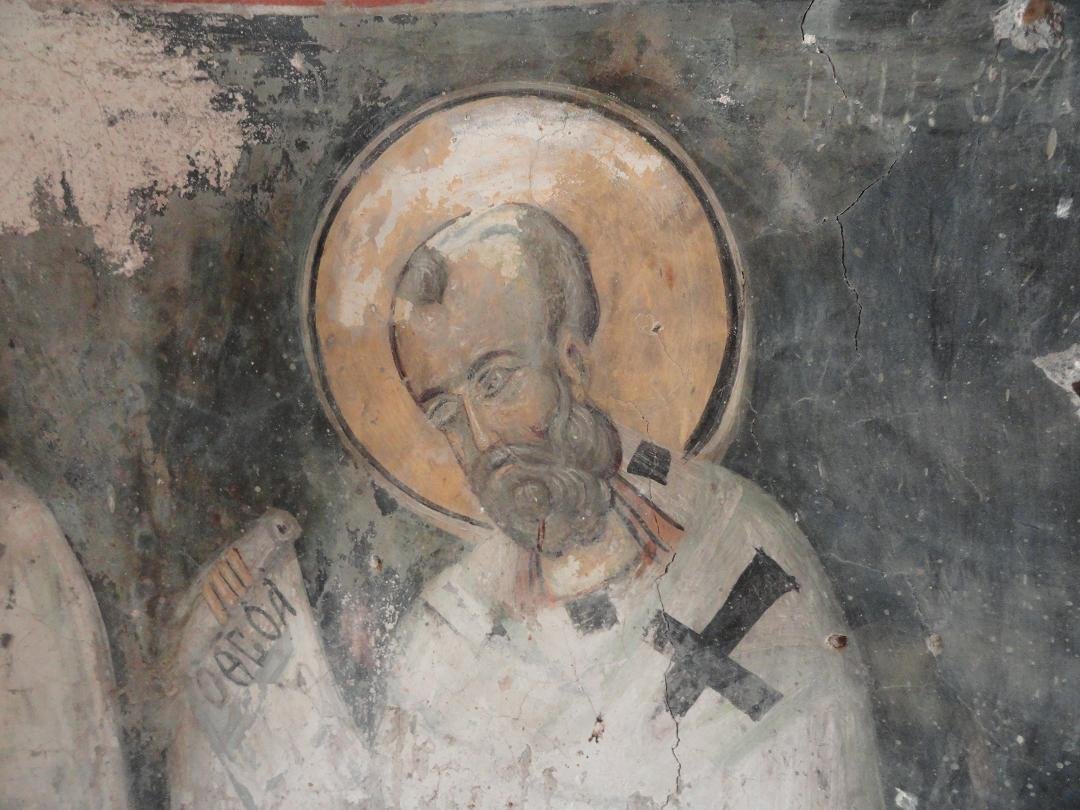


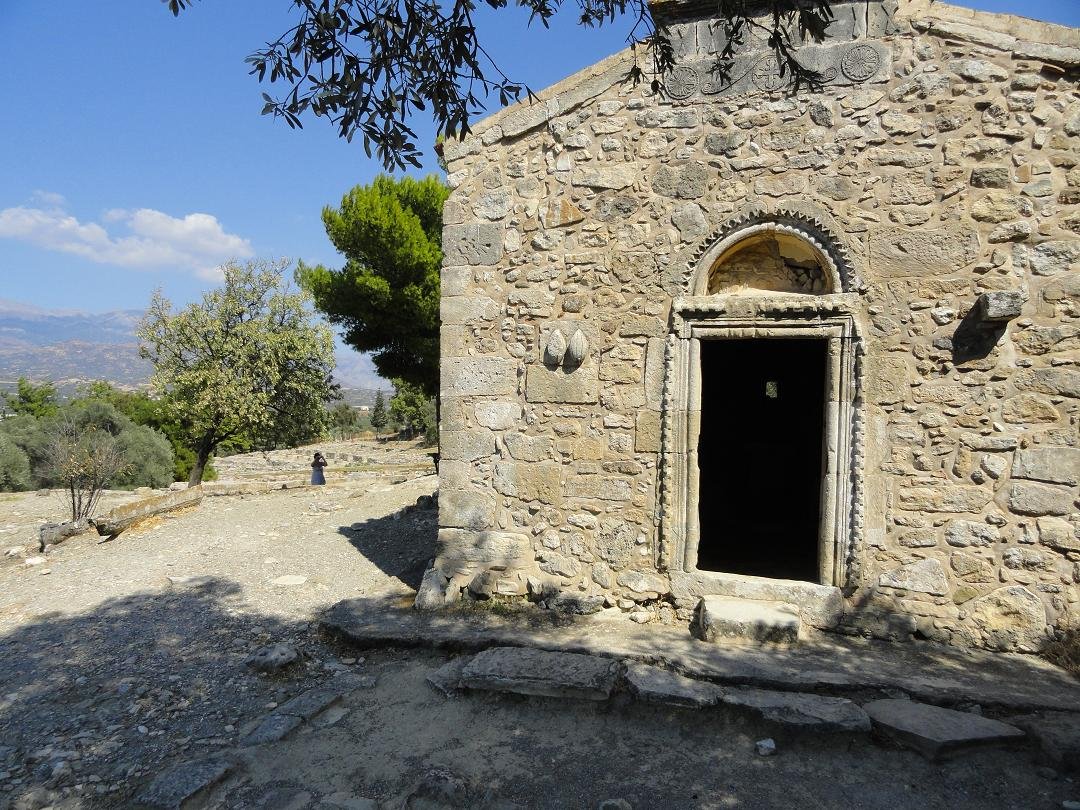
The Byzantine church of Agios Georgios Galatas which stands inside the complex dates from the Venetian period and was built in 1302. Inside the church are fairly well preserved frescoes dating from the 14th century. The frame of the door is carved ans also above the door are sculpted decorations. Next to the door carved melons are hanging on the outside wall.
I tried as good as possible to put the whole story of Agia Triada together, but not all sources tell the same and finally it's sometimes a bit confusing.