


 <
<The Turkish Grammeni fortress - The Kastro Koules Grammeni near Magarikari and Grigoria on Crete

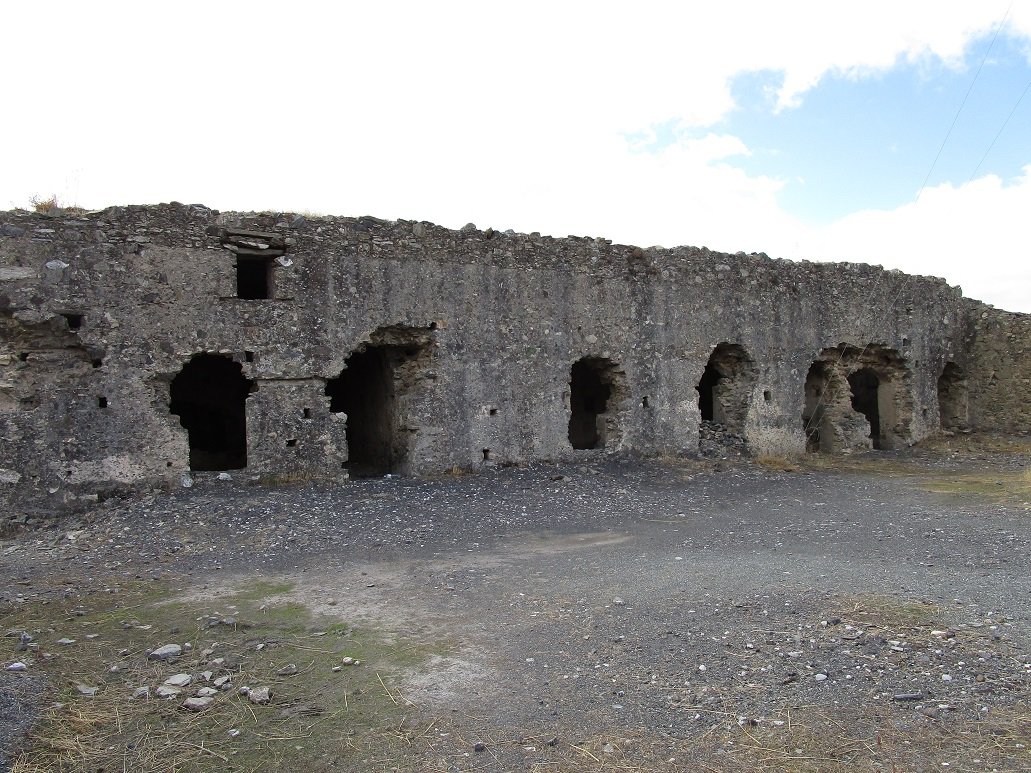
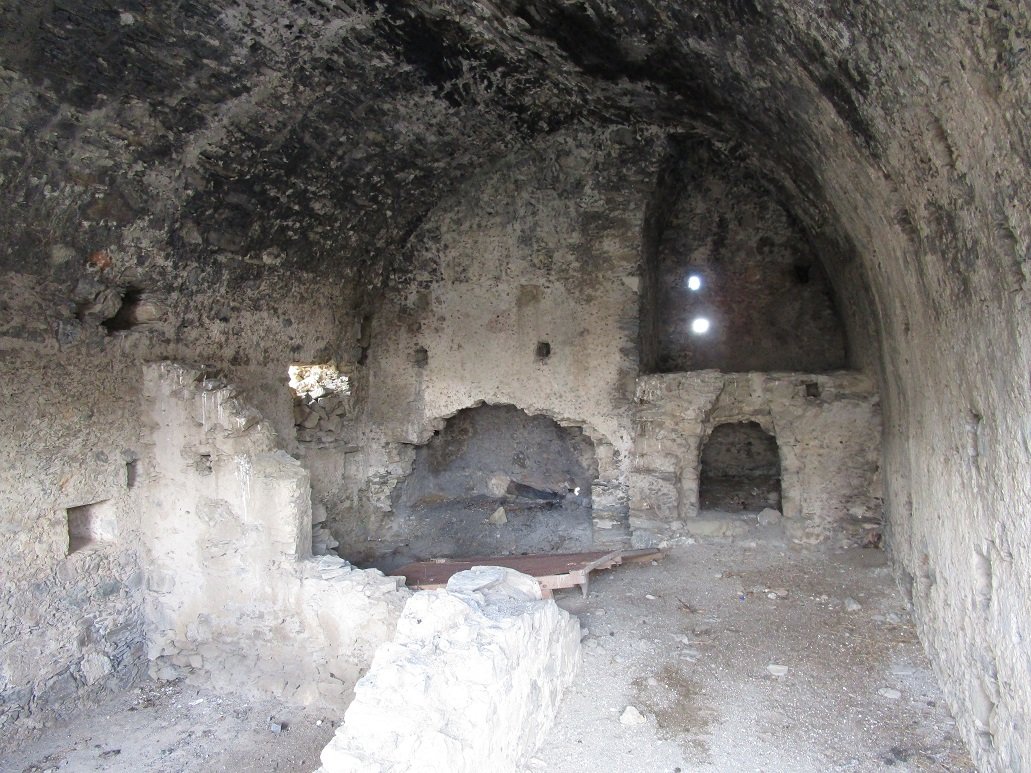
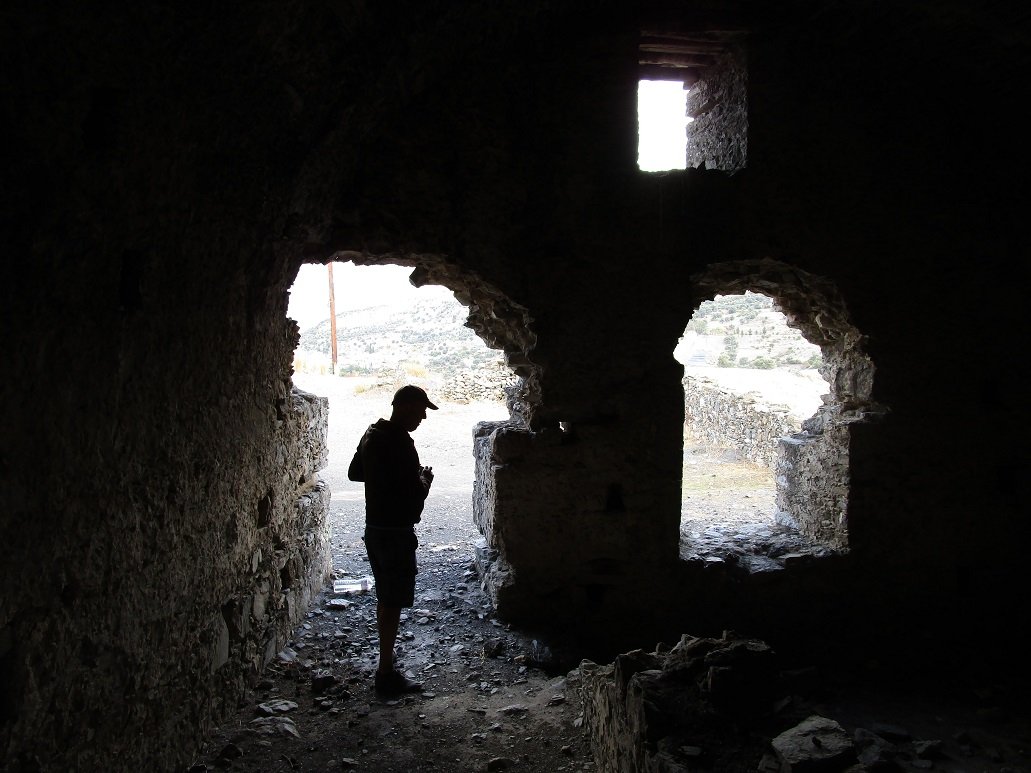

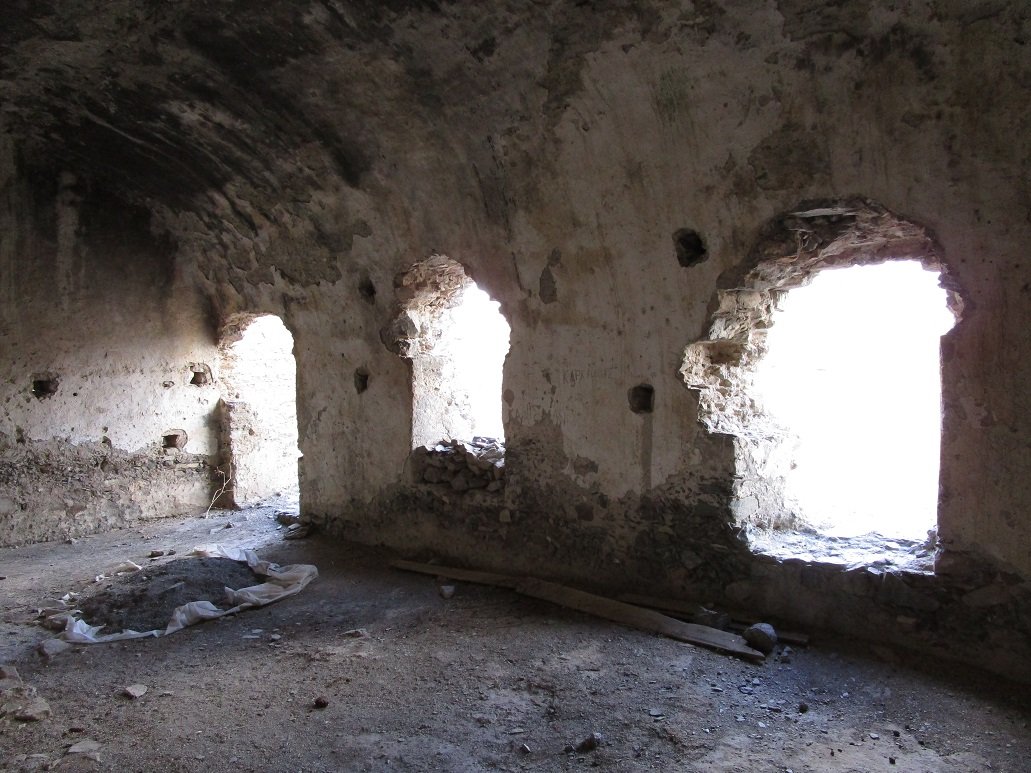
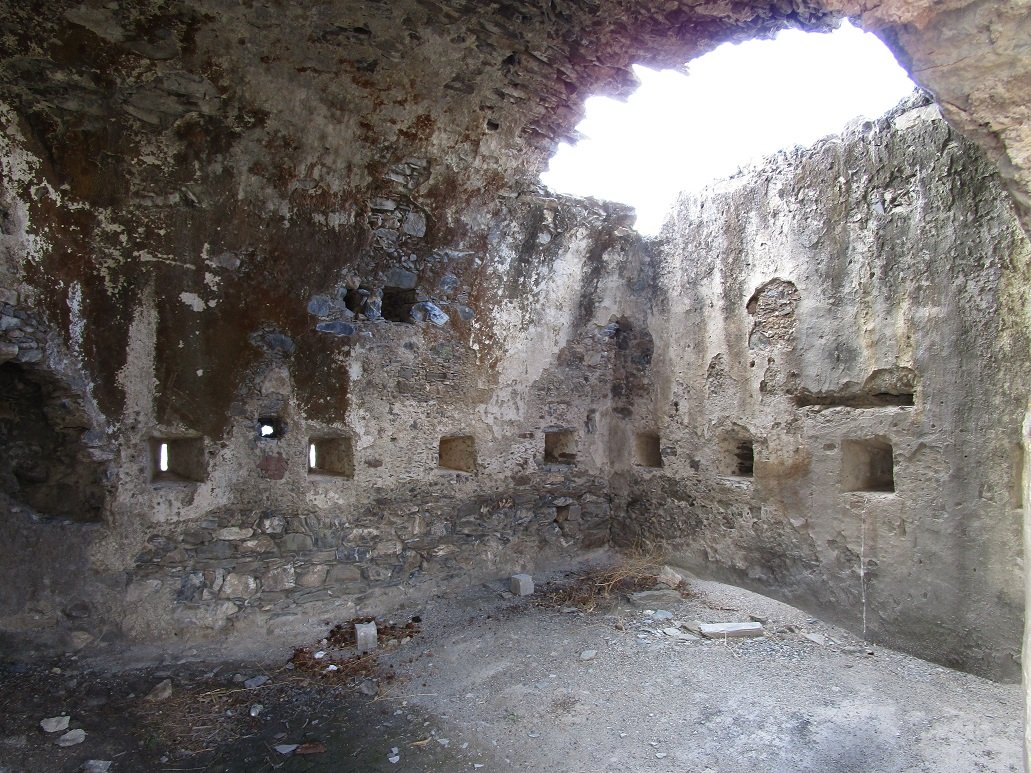


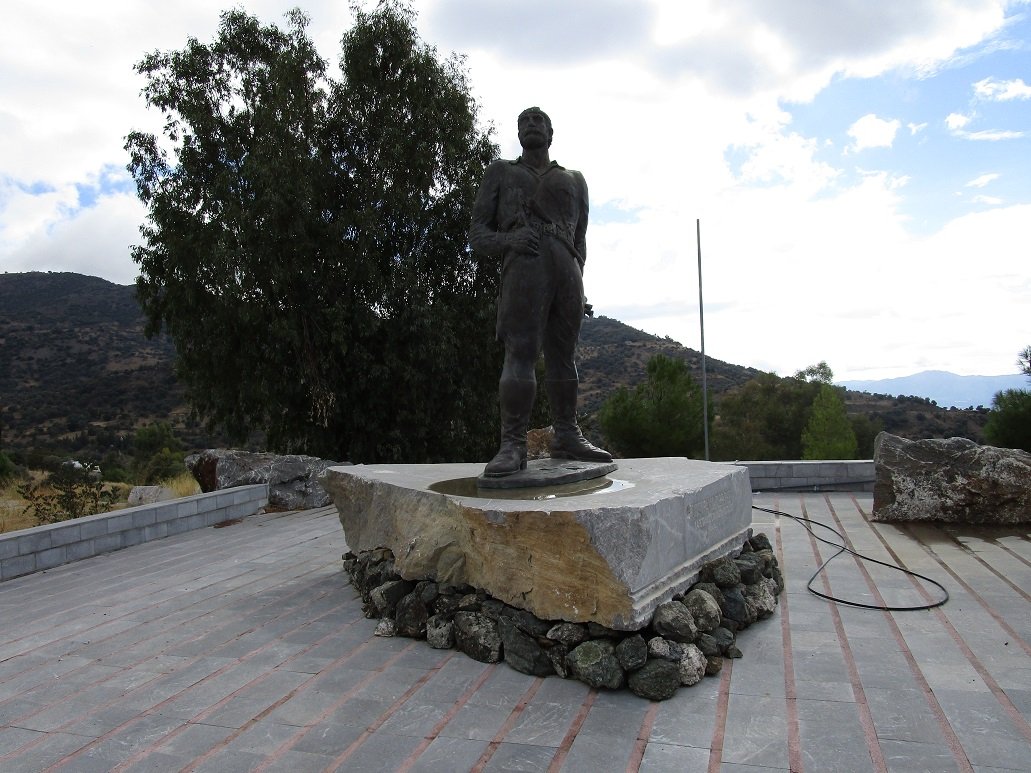
 The fortess of Grammeni or the "Kastro Koules Grammeni" is located in the south of the Heraklion district just north of the town of Timbaki. The easiest way to reach it is to take the route from the motorway between Mires and Timbaki - exit to Vori - Vori - Magarikari - Grammeni fortress - Grogoria. The Grammeni fortress lies at the end of a dirt road between the villages of Magarikari and Grigoria and you can see it from the side of the road. The unpaved road starts at the impressive monuments in memory of the resistance hero Captain Georgios Petrakis. In honor of him a very large statue was erected here in 2009. In 1944 Georgios Petrakis was the first to enter the liberated Heraklion.
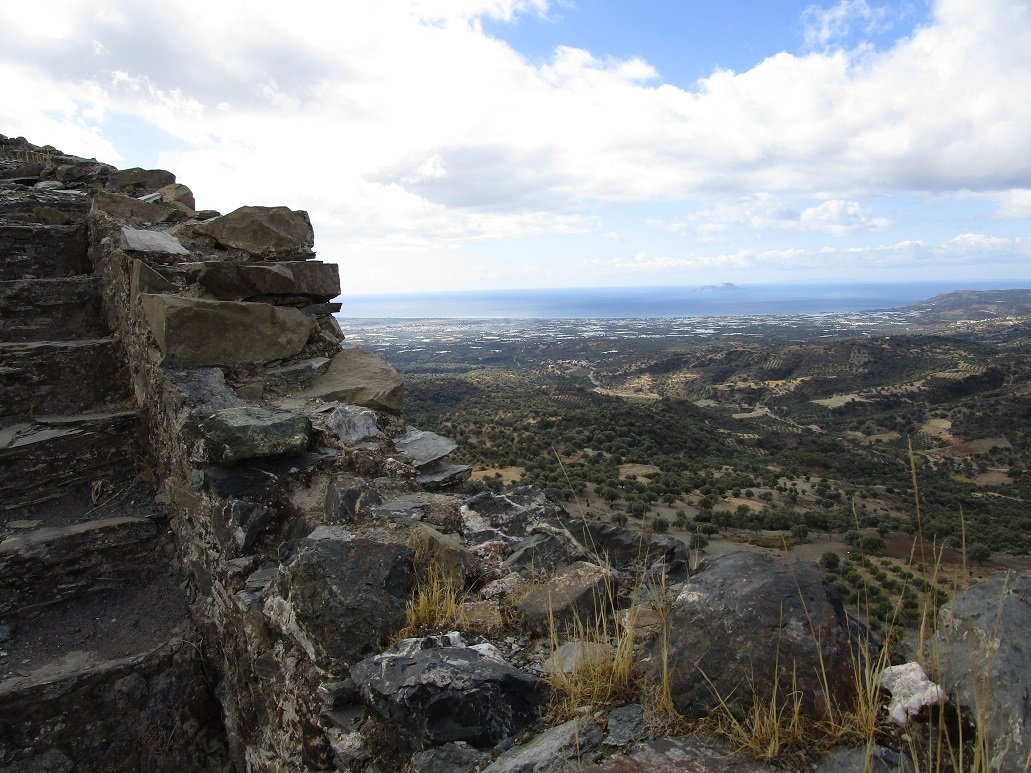
The first stretch towards the fort is also possible to do with the car. You can park your car at the fairly new church (the Isodia Theotokou) that you encounter half way along the route. At the church you turn right (and not straight ahead, at this point it is unclear which way you have to walk because the fortress is out of sight). From the beginning of the asphalt road to the fortress the walk takes about ten minutes to fifteen minutes and is easy to do. The view from all sides of the fort is beautiful, with on one side beautiful mountains and the two villages, and on the other side the sea with the Paximadia islands.




The fortress of Grammeni was built in the 19th century by the Turks in a place that was naturally defensible. It is 11 x 25 meters long and it had 24 battlements. Grammeni and other forts were placed by the Turks at strategic locations around the Messara plain, for example on incoming roads, to isolate the plain and prevent communication with the environment. When the nearby village of Magarikari was destroyed by the Germans in 1944, the inhabitants of the village found refuge in the fortress.